Dental fillings
After the decay is removed, the tooth is restored to its natural shape with tooth-colored composite fillings. A small filling done early can prevent the need for root canal treatment later.
Last updated: 9 November 2026

When is a filling needed?
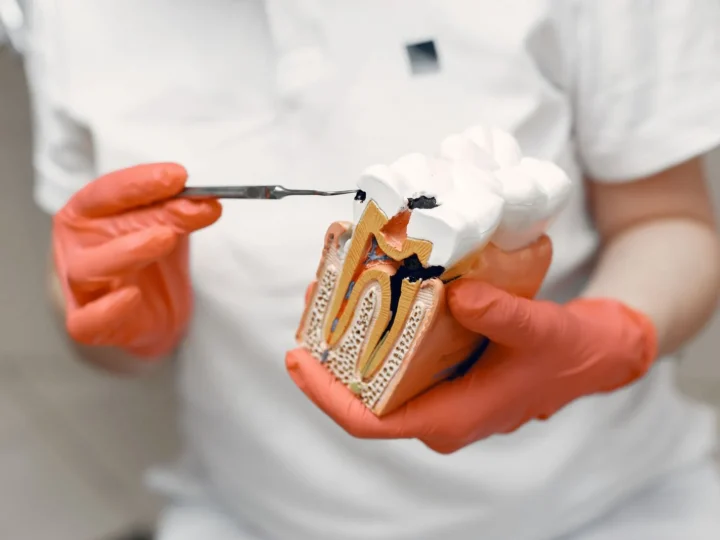
Decay is the loss of tooth structure in the enamel and dentin caused by bacteria. At first it may have no symptoms; as it progresses, sensitivity to sweets and cold, food getting stuck and a visible hole appear. A filling done before the decay reaches the nerve is the simplest and least invasive way to protect the tooth.
Fillings are used not only for decay but also for chips, wear and replacing old, leaking fillings.
Types of fillings
Composite (white) fillings
A tooth-colored, resin-based material that bonds to the tooth. It looks natural on front and back teeth, and less tooth structure is removed.
Inlays and onlays
Laboratory-made porcelain or composite pieces for teeth with large loss of structure that do not need a crown.
Amalgam replacement
Replacing old silver fillings that are cracked, leaking or have decay underneath with a suitable material.
Fillings for children
Fillings with materials suited to baby teeth, planned around how comfortable the child is in the chair. Pediatric dentistry
Send us your question and our dentist will answer based on your situation. A definite plan cannot be made without an examination; the first step is a short consultation.
How is a filling done?
- Examination. Decay is found visually and, if needed, with X-rays.
- Numbing. Local anesthesia is used if needed.
- Removing decay. The decayed tissue is removed and healthy tooth structure is preserved.
- Filling. Composite is placed layer by layer and hardened with light.
- Shaping and polishing. The bite is checked and the filling is polished to the natural shape of the tooth.
After a filling
- Composite hardens with light, so you can eat soon after; waiting until the numbness wears off is recommended.
- There may be mild sensitivity to cold for a few days.
- If the filling feels high when you bite, come back; a small adjustment fixes it.
- Decay can start again at the edge of a filling; regular brushing and check-ups matter.
Frequently asked questions
How long do white fillings last?
It depends on the size of the filling, biting force, clenching habits and oral hygiene. The condition of the filling is followed at regular check-ups.
Should I replace my old amalgam fillings?
Sound, non-leaking amalgam fillings do not always need replacing for that reason alone. They are replaced if cracked, leaking or decayed underneath. We decide together at the examination.
Do fillings hurt?
Local anesthesia is used when needed. For small, shallow cavities numbing is often unnecessary.
How do I know if I have a cavity?
Early decay usually has no symptoms. Check-ups every six months and X-rays when needed are the most reliable way to catch it early.
How long does a filling take?
A single filling is usually done in one session; the time depends on the size of the cavity and the position of the tooth.
How are front tooth fillings done?
On front teeth, tooth-colored composite is placed layer by layer, then shaped and polished to match the natural form of the tooth.

Istanbul University (Çapa), 2001. Worked for eight years as deputy chief dentist and oral diagnosis dentist at the Pendik branch of a dental hospital.
Dentist’s pageThe information on this page is for general guidance only. The treatment that suits you is decided by your dentist after an examination and any necessary tests; the duration and outcome of treatment vary from person to person.
Treatments often planned together.
 General treatmentsRoot canal treatmentA tooth whose nerve is damaged by decay or trauma is saved instead of being extracted.
 General treatmentsScaling and cleaningTartar that brushing cannot remove is cleaned and the surfaces are polished, helping prevent gum disease.
 ChildrenPediatric dentistryTreatment of baby teeth, space maintainers and preventive care. The first visit is only for getting to know each other and playing.
 CosmeticZirconia crownsMetal-free crowns that let light through much like a natural tooth; suitable for front and back teeth.