Why does toothache start at night, and what should you do?
Toothache often gets worse at night when you lie down. We explain the causes, what you can do until morning and which signs mean you should go to the emergency room right away.
Updated: 9 November 2026 · 4 min read
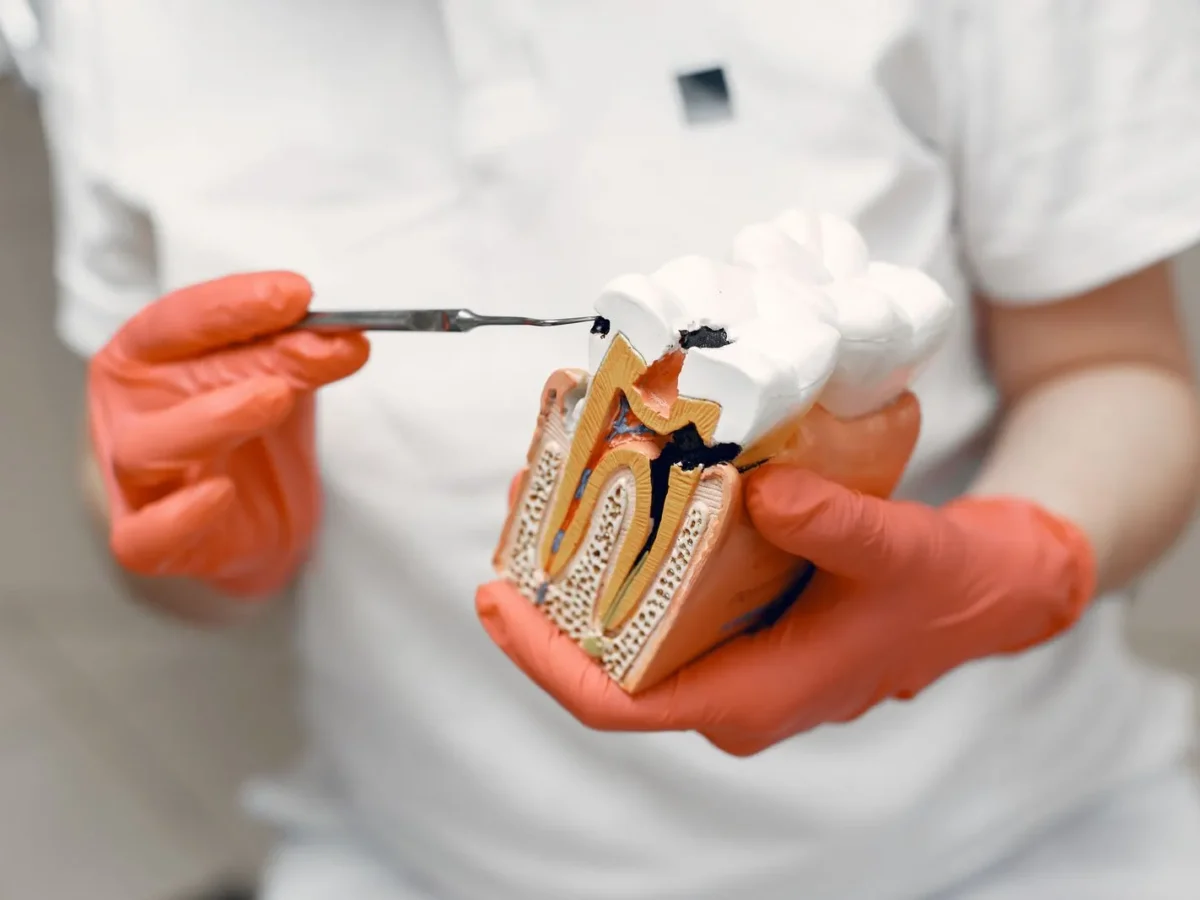
It is very common for a toothache that is mild during the day to turn into throbbing when you go to bed. This does not necessarily mean the pain is “getting worse”, but it is a sign that the tooth has a problem that needs treatment. In this article we explain why pain increases at night, what you can do until morning and which signs mean you should go to the emergency room without waiting.
Why does toothache get worse at night?
When you lie flat, blood flow to the head increases. If the tissue inside the tooth that holds the nerves and blood vessels (the pulp) is inflamed, the pressure there rises too and the pain starts to throb. During the day, work, talking and moving distract you; in the quiet of the night you feel the pain more strongly.
Common causes of toothache at night
- Deep decay and nerve inflammation: When decay reaches the nerve, it causes pain that starts on its own, gets worse with heat and wakes you at night. Root canal treatment is often needed.
- Dental abscess: A build-up of infection at the root of the tooth or in the gum. It causes pain that worsens when biting, swelling and sometimes a bad taste.
- Wisdom tooth: The gum around a partly erupted wisdom tooth can become inflamed, with difficulty opening the mouth and pain radiating to the ear. See our wisdom tooth removal page for details.
- Clenching and grinding: People who clench in their sleep have a general ache in the jaw and teeth toward morning. We describe the signs on our bruxism page.
- Broken filling or cracked tooth: Causes sharp, brief pain when chewing or drinking something cold.
- Sinusitis: Pain in the upper back teeth that spreads across several teeth and gets worse when you bend forward may come from the sinuses.
What you can do to ease the pain until morning
- Raise your head. Sleeping with an extra pillow reduces the pressure toward the head.
- Rinse with warm salt water. Half a teaspoon of salt in a glass of warm water is enough. If food is stuck between your teeth, clean it gently with floss.
- Apply cold to the outside of your cheek. Hold ice wrapped in a cloth on your cheek for 15–20 minutes, take a break and repeat.
- A painkiller you have used before and that suits you can be taken at the dose and intervals on the package. If you take regular medication, are pregnant or breastfeeding, ask your pharmacist or doctor.
- Avoid very hot, very cold and sugary food and drinks, and do not chew on that side.
What not to do
- Do not put a painkiller tablet (especially aspirin) on the tooth or gum; it can burn the gum.
- Do not put a hot compress on swelling; it can help the infection spread.
- Do not start leftover antibiotics on your own. Whether an antibiotic is needed, and which one, is the dentist’s decision; besides, most toothaches do not go away with antibiotics alone, the cause has to be treated.
- Do not put off your appointment because the pain stopped. With nerve inflammation, pain stopping suddenly can mean the nerve has died; the problem continues silently.
Which signs mean you should go to the emergency room right away?
If you have any of the following, do not wait until morning; go to the nearest hospital emergency department or call 112 (the emergency number in Turkey):
- Swelling in the face, under the jaw or around the eye that is growing quickly,
- Difficulty swallowing or breathing,
- High fever, chills and general weakness,
- Being unable to open your mouth,
- A tooth broken or knocked out after a blow (bring a knocked-out permanent tooth in milk or saline, without holding it by the root).
What to do in the morning
Even if the pain has eased, it is best to see a dentist the same day. At the exam, the source of the pain is found with an X-ray, and the treatment needed, such as a filling, root canal treatment, draining an abscess or gum treatment, is planned. Often a procedure to stop the pain can be done at the first visit.
If you have been putting off dental treatment because you are anxious, tell your dentist. For patients who are afraid, sedation dentistry is also available.
Frequently asked questions
Why does toothache get worse at night?
When you lie down, blood flow to the head increases and the pressure inside the inflamed tooth rises. At night there is nothing to distract you, so you feel the pain more strongly.
Does toothache go away on its own?
The pain may ease for a while, but decay, nerve inflammation or an abscess do not heal on their own. If the cause is not treated, the problem grows and treatment can take longer.
Which dentist should I see for toothache?
The first place to go is a general dentist. After an exam and X-ray, you are referred to the right specialist if needed.
If you are in Pendik or Tavşantepe, our practice is open Monday–Friday 09:00–18:00 and Saturday 09:00–14:00. First thing in the morning you can reach us on WhatsApp or by phone; if you tell us you are in pain, we will find the earliest suitable time together.
This article is for general information and does not replace an examination. The treatment that suits you is decided by your dentist after an examination.
More articles.
 General dental healthWhat to look for when choosing a dentist in PendikChoosing a dentist is about more than the number of reviews. We go through concrete criteria one by…Read
 General dental healthWhat is bruxism? Signs and treatment of night-time teeth clenchingMorning jaw fatigue, headaches and worn teeth can be signs of bruxism. The causes, signs and treatment options…Read
 General dental healthWhat is endodontics? Common questions about root canal treatmentWhy root canal treatment is needed, how it is done and what to watch out for afterward. What…Read